

Categories
Investing, Park CityPublished September 21, 2026
Deer Valley East Village Expansion and Park City Real Estate

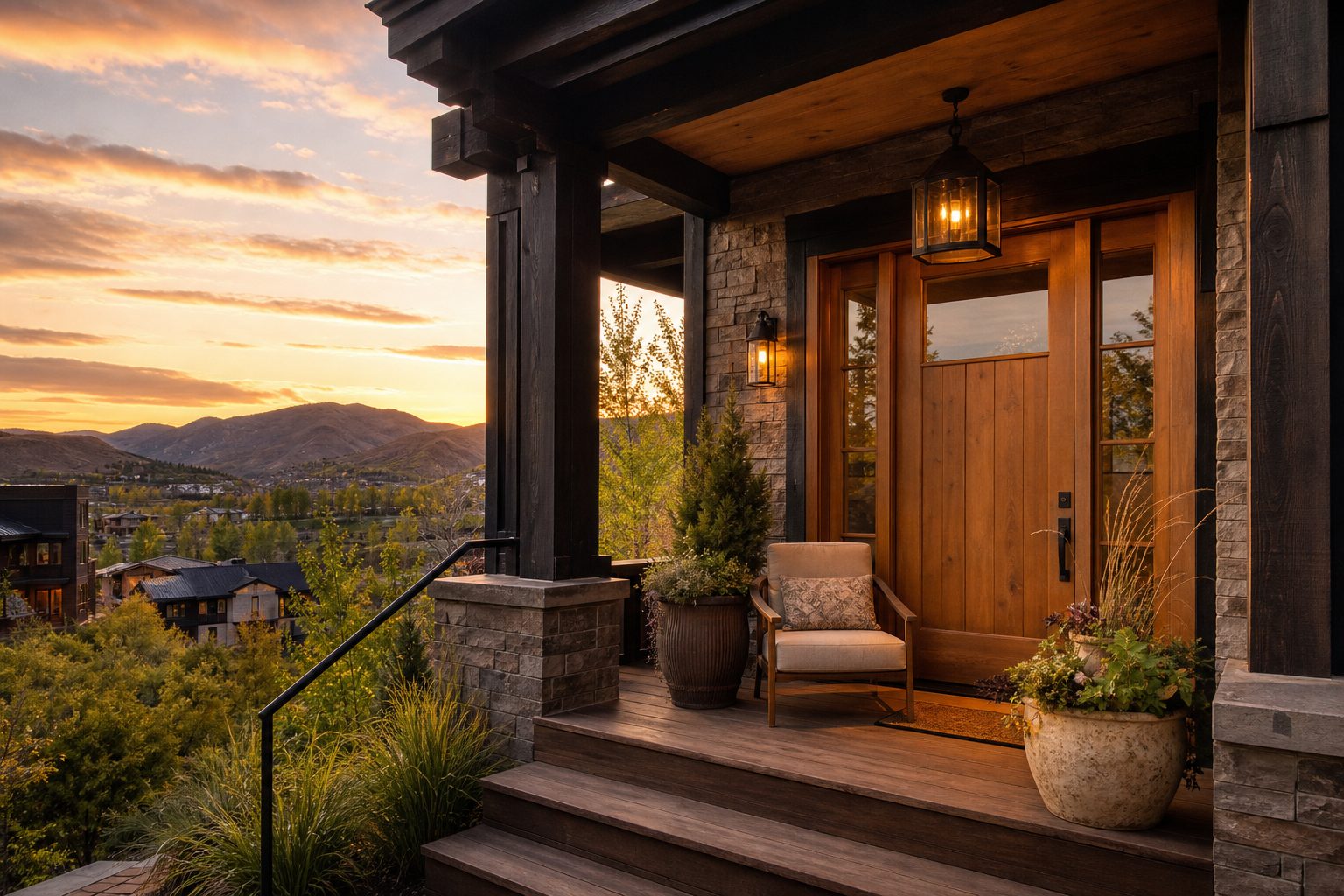
The Deer Valley East Village expansion is the biggest change to this side of the mountain in decades, and it has genuinely moved buyer demand along the Highway 40 corridor. It has not, however, turned Park City into a seller's market. Both of those things are true right now, and the Park City MLS numbers below show why that combination is the whole opportunity.
I want to be precise about the timeline, because the build-out schedule gets quoted loosely and it drives real money decisions.
What is actually open at East Village today
The expansion opened in phases, and the phasing matters more than any single headline. The first new terrain went live on December 31, 2024, when the Keetley Express chairlift opened roughly 300 acres of never-before-skied terrain on the Highway 40 side of the mountain.
The 2025/26 season, which opened December 7, 2025, is when the expansion got big. Deer Valley added seven more chairlifts and nearly 80 new ski runs, including the 4.8-mile Green Monster running from the top of Park Peak down to the East Village base. With that terrain online, Deer Valley reached 5,726 skiable acres and became North America's fifth-largest resort.
Terrain on Hail Peak is slated for the 2026/27 season, with South Peak in later phases. So the skiing side of the expansion is largely delivered and still growing. The village side is a different story.
What is still years away, and why the 2028 date is wrong
Utah Business puts the full East Village program at roughly $5 billion, with 42 retail shops plus 32 restaurants and 7 cafes planned at build-out. On lodging: the Grand Hyatt is open with 381 rooms, a Hilton Canopy opened in summer 2026, a 134-room Four Seasons is under construction, and a Waldorf Astoria is slated for 2028. Visit Utah describes the eventual program as roughly 800 hotel rooms and 1,600 residential units.
You will see "full build-out by 2028" repeated in a lot of places. I cannot source it. The 2028 date belongs to the Waldorf Astoria, not to the village. Utah Business frames the actual target as having East Village complete by the time the 2034 Winter Olympics arrive. That is a materially different holding period, and if you are underwriting a purchase on the assumption that the village is finished in two years, you are underwriting the wrong timeline.
Here is the sequence as best it can be sourced today:
- December 31, 2024: Keetley Express opens; roughly 300 acres of new terrain and the first Highway 40 portal access.
- December 7, 2025: 2025/26 season opens with seven more chairlifts, nearly 80 new runs, and the 4.8-mile Green Monster.
- 2026/27 season: Hail Peak terrain planned; South Peak in later phases.
- 2026 through 2028: Lodging phases in — Hilton Canopy (2026), Four Seasons (under construction), Waldorf Astoria (2028).
- Toward 2034: Full village core — the 42 shops, 32 restaurants and 7 cafes, and the balance of roughly 800 hotel rooms — targeted ahead of the Winter Olympics.
What the Park City MLS actually shows in the East Village corridor
This is the part the national coverage never gets to, and it is the part that should drive your decision.
The Jordanelle area — the Park City MLS minor area that covers the Highway 40 corridor closest to the new East Village portal — is where the expansion shows up most clearly in closed sales. Comparing full-year 2023 against 2026 year to date through September 21:
- Median closed price rose from $1,271,733 (313 sales) to $1,735,000 (223 sales), up 36.4%.
- Median price per square foot rose from $551 to $638, up 15.8%.
That is a real repricing, and it is the strongest evidence I have that the East Village access point changed how buyers value this corridor. Note that 61.5% of Jordanelle closings in that window were new construction, so some of the median move is bigger homes rather than pure appreciation — the price-per-square-foot number is the cleaner read.
Deer Valley proper tells a more complicated story, and I would rather give you the complication than a clean number that misleads. Over the same window, the Deer Valley area's median closed price actually slipped 2.3%, from $2,527,500 to $2,470,000 — while median price per square foot rose 14.1%, from $1,022 to $1,166. Those point in opposite directions because 42.3% of Deer Valley sales in the period were new construction and the mix of what sold shifted year to year. Values per foot are up. The headline median is a mix artifact, not a decline.
For context on where that sits inside the greater Park City market, 2026 year-to-date median price per square foot runs $1,271 in Old Town, $1,166 in Deer Valley, and $713 across the Snyderville Basin. Deer Valley carries a clear premium over the Basin. It does not carry one over Old Town.
Prices are up. So is inventory — sharply.
This is the finding that should change how you act, and it is the opposite of the "buy before it gets away from you" framing this expansion usually gets.
As of today, the Park City MLS shows 10.2 months of supply in the Jordanelle area — 279 active listings against a six-month absorption rate of about 27 sales a month, with a median active list price of $2,136,012 and active listings sitting a median of 97 days. Deer Valley is tighter on count and looser on supply: 12.6 months, with 84 actives, a median active list price of $4,974,000, and a median 82 days on market.
Anything above roughly six months of supply is a buyer's market. Both of these are comfortably past that. You can see the same pressure in how long it now takes to sell: median days on market for closed Jordanelle sales went from 15 days in 2023 to 46 days in 2026 year to date.
So the accurate read is not "prices are running away." It is "prices per foot have moved up meaningfully, and buyers currently have more inventory, more time, and more negotiating room than they have had in years." If you are buying, that is a better position than the headlines suggest. If you are selling, it means the expansion narrative alone will not sell your property — pricing and presentation still carry the weight.
Does this change anything for Salt Lake Valley buyers?
The East Village portal off Highway 40 does make Deer Valley more reachable from the Salt Lake Valley east bench without driving through Old Town. That part is simply true, and I hear it from clients.
What I will not tell you is that it has moved east bench prices. I checked, and the Wasatch Front MLS does not support that claim. Comparing full-year 2023 to 2026 year to date, median closed prices are up 5.7% in Cottonwood Heights ($733,000 to $775,000), 11.7% in Holladay ($749,500 to $837,350), 9.1% in Sandy ($599,950 to $654,800), and 2.5% in Millcreek ($617,000 to $632,700). Meanwhile median days on market lengthened in three of the four: Cottonwood Heights 22 to 36 days, Millcreek 26 to 32, Sandy 27 to 33.
That is a normal, modestly appreciating market with slowing absorption — not a resort-driven demand surge. Ski access is a genuine lifestyle argument for an east bench home. It is not, on this evidence, a pricing argument, and you should be skeptical of anyone who tells you otherwise. If you are weighing a sale on the east bench, choosing the right listing agent matters far more to your outcome than anything happening at Deer Valley.
How I would think about timing
If you are buying, the current buyer's market is the opportunity, not the expansion narrative. Ten to twelve months of supply gives you leverage on price, terms, and closing timeline that did not exist in 2021 or 2022. Use it. The long build-out horizon toward 2034 also means you are not late — there is no cliff in 2028 that you need to beat.
If you are considering new construction near the portal, the phasing question is the whole deal, and it is worth reading up on what to know about buying new construction in Deer Valley East Village before you sign anything. If ski access is your priority, what ski-in/ski-out really means in Park City is worth ten minutes, because the term is used very loosely around the new terrain.
If you are considering renting the property out, note that eight hundred new hotel rooms eventually landing in the village core is real competition for the nightly-rental pool in that immediate corridor. What a Park City ski condo can actually earn as a nightly rental is the right starting point, and where nightly rentals are allowed in Park City matters before you model a dollar of income.
If you are selling, the honest question is whether your specific property benefits from the East Village story at all. Jordanelle-corridor property does. A home in the Basin with no portal proximity mostly does not. You can request a current home valuation as a starting point, but the real answer comes from comparing your property against what has actually closed nearby this year.
The bottom line
The expansion is real, it is largely delivered on the skiing side, and it has measurably repriced the Jordanelle corridor — 36.4% on median price and 15.8% on price per square foot since 2023. The village is not finished in 2028; the credible target is closer to 2034. And right now, despite all of it, both Deer Valley and the Jordanelle corridor are buyer's markets with double-digit months of supply. Anyone selling you urgency on this story is selling you something the data does not support.
Frequently Asked Questions
When did the Deer Valley East Village terrain actually open?
The first expansion terrain opened December 31, 2024, when the Keetley Express chairlift opened roughly 300 acres of new terrain off the Highway 40 side. The much larger phase came with the 2025/26 season, which opened December 7, 2025 and added seven more chairlifts and nearly 80 runs, including the 4.8-mile Green Monster from Park Peak to the East Village base. Deer Valley now covers 5,726 skiable acres.
When will East Village be fully built out?
Later than most coverage suggests. The Waldorf Astoria is slated for 2028, which is where the widely repeated "2028 build-out" figure appears to come from, but that is one hotel rather than the village. Utah Business frames the full program — roughly $5 billion, 42 retail shops, 32 restaurants and 7 cafes, and roughly 800 hotel rooms — as targeted for completion by the time the 2034 Winter Olympics arrive. Plan your holding period against 2034, not 2028.
Have property values near the East Village portal actually gone up?
Yes, and the Park City MLS shows it clearly in the Jordanelle area, which covers the Highway 40 corridor nearest the portal. Comparing full-year 2023 with 2026 year to date through September 21, median closed price rose 36.4% from $1,271,733 to $1,735,000, and median price per square foot rose 15.8% from $551 to $638. Because 61.5% of those closings were new construction, the price-per-square-foot figure is the more reliable measure of appreciation.
Is now a good time to buy near Deer Valley, or should I wait?
Current conditions favor buyers more than the expansion headlines imply. The Park City MLS shows 10.2 months of supply in the Jordanelle area and 12.6 months in Deer Valley, with active listings sitting a median of 97 and 82 days respectively. Anything over about six months is a buyer's market. Combined with a build-out horizon running toward 2034 rather than 2028, there is no deadline forcing a rushed decision — which is exactly when you have the most negotiating leverage.
Does the East Village expansion make Salt Lake Valley east bench homes more valuable?
It makes them more convenient for skiing, not demonstrably more valuable. Wasatch Front MLS data comparing full-year 2023 with 2026 year to date shows median closed prices up 5.7% in Cottonwood Heights, 11.7% in Holladay, 9.1% in Sandy, and 2.5% in Millcreek, with days on market lengthening in three of the four. That is an ordinary, modestly appreciating market. Treat the Highway 40 access as a lifestyle benefit rather than a pricing thesis.
If you're buying or selling in Park City, Deer Valley, the Jordanelle corridor, or anywhere across the Wasatch Back, we're happy to consult on the market and help you assess your options. Reach out to schedule a private consultation with our team, and we'll walk through what the East Village phasing actually means for your specific property, your timeline, and the leverage the current market gives you.
About David Lawson
David Lawson is the founder of the Lawson Real Estate Team, a luxury real estate group serving Park City and the greater Wasatch Back, including Hideout, Midway, Heber, and Kamas. He leads a team that has closed more than 3,920 transactions and earned recognition as the #1 eXp Realty team in Utah (2022–2025) and previously the #1 Engel & Völkers team worldwide (2019, 2021). David and his team specialize in high-end mountain properties, from single family homes and new construction to ski-in/ski-out vacation properties and short-term rental investments, guiding buyers and sellers through one of the most segmented luxury markets in the country.
Equal Housing Opportunity. Each office is independently owned and operated. Licensed by the Utah Division of Real Estate. This article is general information only and does not constitute legal, tax, or financial advice. Market figures are drawn from the Park City MLS and the Wasatch Front MLS as of September 21, 2026 and change over time. Confirm your specific numbers with your closing agent, tax advisor, or lender.

David Lawson
Team Leader | Lawson Real Estate Team
or another way