

Categories
Park City, SellingPublished October 14, 2026
Park City Real Estate and the 2034 Winter Olympics
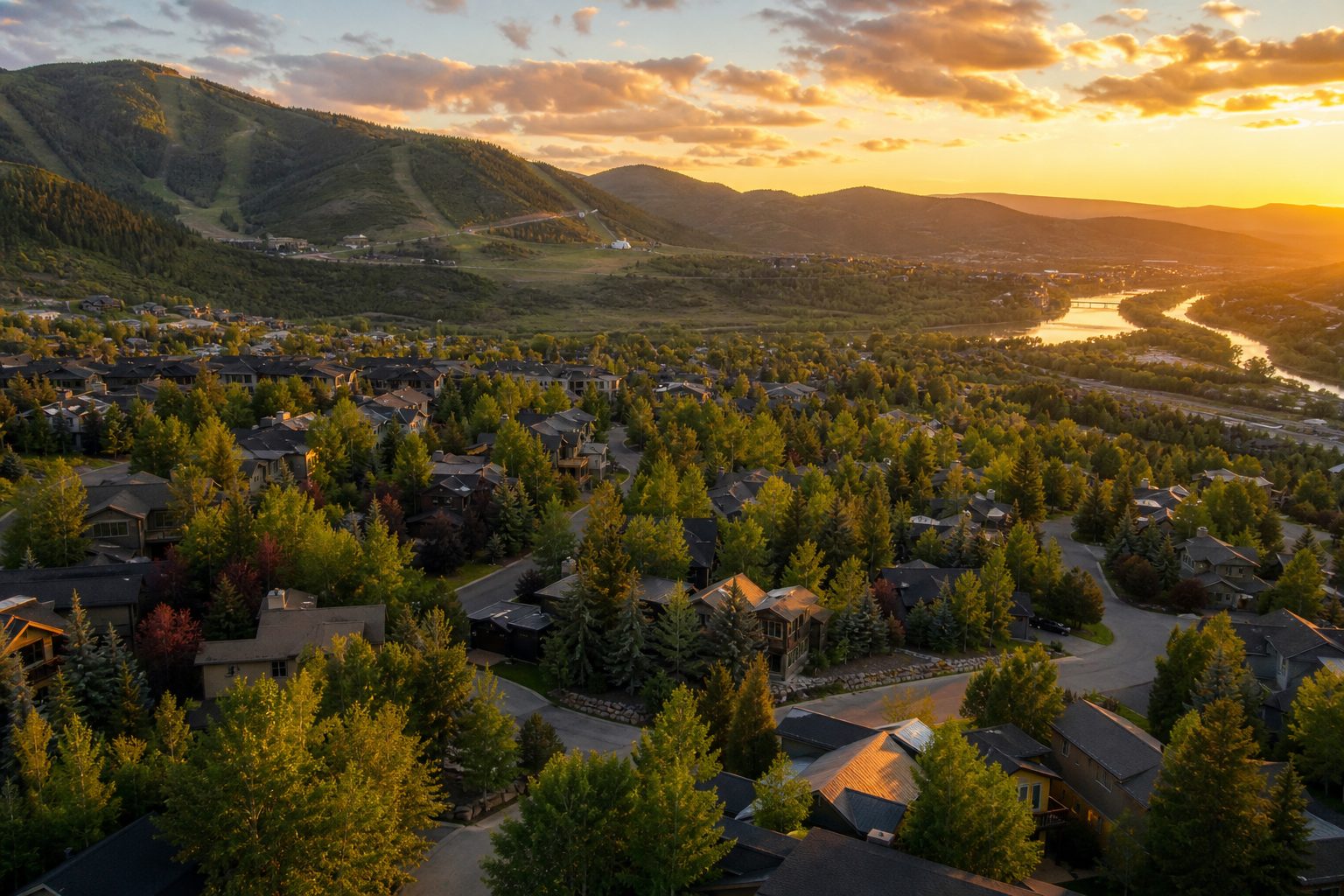
What could the 2034 Winter Olympics mean for Park City real estate?
The 2034 Winter Olympics, scheduled for February 2034, could support long-term demand for Park City real estate, but nothing in the market data shows that happening yet. Three Park City-area venues are named in the Games plan, and Utah Olympic Park sits in the Snyderville Basin, so that area has the most direct venue connection. What the Park City MLS actually shows today is the opposite of an Olympic premium: the neighborhoods closest to the venue have not appreciated on a per-square-foot basis since Utah was awarded the Games, and the handful of listings marketing 2034 are selling slower and for less than the market around them. Treat the Games as one long-term demand factor among several, not as a reason to pay more now.
Key Takeaways
- In Sun Peak and Bear Hollow, the neighborhoods right beside Utah Olympic Park, the median closed price per square foot has not moved since 2024 — $599, then $600, then $598 — across 114 sales. Utah was awarded the Games in July 2024.
- Of the ten active listings in the Park City MLS that mention 2034 in their public remarks, six have already cut their asking price, by between 2.3% and 26.6%, and none of the ten is under contract. The median time on market across the ten is 151 days.
- The six Olympic-marketed listings that closed in 2026 sold for a median 87.7% of their original asking price after a median 110 days on market, against a 2026 market average near 94% of original list in both Park City city limits and the Snyderville Basin.
- The Summit County Council approved the amended Utah Olympic Park development agreement on April 15, 2026, by a 5–0 vote, allowing up to 168 housing units and a 120-unit hotel. The approval is now the subject of a pending lawsuit filed by the Sun Peak Homeowners Association.
- Both markets currently favor buyers. Park City city limits carries 644 active listings and 7.9 months of supply; the Snyderville Basin carries 365 active listings and 6.6 months of supply.
- The Games are scheduled for February 2034, which puts any Olympic effect on housing, rentals, traffic, and construction in a defined future window — more than seven years out — not in today's market.
What is actually confirmed about the Games, and what is not?
The confirmed part is narrower than the conversation around it. Utah is hosting the 2034 Olympic and Paralympic Winter Games, run by the Organizing Committee for the 2034 Olympic and Paralympic Winter Games, and Park City is central to the venue plan. Everything beyond that, including price effects, is analysis rather than fact.
Three Park City-area venues are named in the plan, according to the Park Record:
- Utah Olympic Park — ski jumping, Nordic combined jumping, bobsled, luge, skeleton, snowboard parallel giant slalom, snowboard cross, and freestyle ski cross. It is in the Snyderville Basin, in unincorporated Summit County.
- Park City Mountain — snowboard and freestyle halfpipe and slopestyle.
- Deer Valley Resort — freestyle skiing aerials and moguls.
The rest of the venue program sits outside Park City, at Snowbasin, Soldier Hollow in Wasatch County, and a cluster of existing Salt Lake City facilities. Because almost every venue already exists, this is not a build-from-scratch Olympics. That limits how much construction disruption to expect, and it also limits how much brand-new infrastructure could reshape the market.
Which Park City market are we talking about?
Three different geographies get blended in Olympic conversations, and their numbers are genuinely different:
- Park City city limits, which include Old Town, Prospector, and the Deer Valley and Park City Mountain resort bases.
- The Snyderville Basin, the unincorporated Summit County area that contains Utah Olympic Park, Kimball Junction, Canyons Village, and Trailside.
- The wider Park City MLS reporting area, which also takes in Heber Valley, the Jordanelle, Kamas, and even Snowbasin.
An area-wide figure will always be lower than a Park City city-limits figure, and quoting one while naming the other is the most common way Olympic commentary misleads people. Every figure below is labeled, and all of them come from the Park City MLS through October 14, 2026 — not from a quarterly board summary that is now two quarters stale.
What does the market look like before the Games?
| Measure (Park City MLS, Oct. 14, 2026) | Park City city limits | Snyderville Basin |
|---|---|---|
| Active listings | 644 | 365 |
| Under contract | 390 | 103 |
| Months of supply | 7.9 | 6.6 |
| Median closed price, Q3 2026 | $2,225,000 | $2,300,000 |
| Median closed price, Q3 2025 | $2,150,000 | $1,622,113 |
| Closings, January–September | 675 (from 754) | 448 (from 429) |
Read that carefully, because the two markets are not telling the same story. Inside the city limits, closings are down about 10% year over year while the median price has barely moved. In the Snyderville Basin — the area with the venue — closings are actually up about 4%, and the Q3 median jumped because what sold was bigger and newer, not because every home gained value. Median price per square foot there went from $616 in Q3 2025 to $764 in Q3 2026, which is a real move but one that reflects a heavy new-construction mix.
Both areas are carrying more than six months of supply, which is the conventional line between a seller's market and a buyer's market. Snyderville Basin inventory today runs from a $291,875 two-bedroom condo in Silver Creek to a $55 million estate in The Colony, with a resale median asking price of $1,450,000 and a new-construction median asking price of $4,199,500. None of that is an Olympic effect. The Games are more than seven years away.
Has the neighborhood next to the venue appreciated?
This is the cleanest test available, and it is the one most Olympic commentary skips. Utah was awarded the 2034 Games in July 2024. Sun Peak and Bear Hollow sit immediately around Utah Olympic Park — if venue proximity carried a premium anywhere, it would show up there first. Across 114 closed sales in that area, the median closed price per square foot was:
- 2024: $599 (44 sales)
- 2025: $600 (37 sales)
- 2026 through October 14: $598 (33 sales)
That is a change of negative 0.2% over nearly three years. The area's headline median price did rise sharply over the same period, from $1,310,000 to $1,974,360, but that is because the median home that sold grew about 31% larger — from roughly 2,219 to 2,904 square feet. It is a change in what sold, not in what homes are worth. Sellers quoted the first number will think the neighborhood gained 50%. On a like-for-like basis it gained nothing.
What happened to the homes that marketed the Olympics?
The second test is the listings that have tried to sell the story. I searched the Park City MLS for every listing whose public remarks mention 2034. Here is what the feed shows as of October 14, 2026:
- Ten active listings mention the 2034 Games. Six have cut their asking price — the cuts run from 2.3% to 26.6%, including a Sun Peak home a short distance from Utah Olympic Park that came down $205,000, and a Prospector condo that has come down $425,000 from its original ask.
- None of the ten is under contract. Their median time on market is 151 days, and the longest has been listed 253 days.
- Six Olympic-marketed listings closed in 2026. They sold for a median 87.7% of their original asking price, after a median 110 days on market.
For comparison, 2026 closings averaged 94.3% of original list price inside Park City city limits, with a median 32 days on market, and 94.2% for Snyderville Basin resales, with a median 37 days. Both of those are the markets most of the Olympic-marketed group sits in, and the group came in roughly six to seven percentage points further below the original ask while taking about three times as long to sell.
Three honest caveats. These are small samples — ten actives and six closings. The group is geographically mixed: most are in Park City city limits or the Snyderville Basin, but it also includes listings at the Jordanelle, at Snowbasin, and one in Salt Lake City, all of which are near other Games venues. And a listing that leans on the Games in its remarks may also be one that was priced ambitiously for other reasons, so I would not claim the Olympic language itself caused the discount. What I will say is that if you are a seller being told the 2034 Games justify a higher number, this is the only evidence the local market has produced so far, and it runs against you.
Should buyers purchase before the Games?
Buy if the property works for you today: ski access, location, condition, and carrying costs. I would rather a client buy a home they would be glad to own in 2029 than one they are counting on a 2034 spike to justify.
With both markets above six months of supply, buyers have more negotiating room than in the most competitive pandemic-era phases, and the Olympic-marketed listings above are a specific place to look for it: six of them have already shown they will move on price. That is not true of every property or neighborhood, so it is worth testing home by home. Our post on what buyers should know about resort properties in Park City covers the fundamentals that matter regardless of the Games — club membership, rental eligibility, and HOA structure chief among them.
Should sellers try to price in Olympic interest?
You can market Olympic proximity as a long-term location attribute, particularly with strong ski access, proximity to Utah Olympic Park, transit, or established lodging demand. What you should not do is price off it.
The trap is visible in the data above: the neighborhood beside the venue has not appreciated per square foot since the Games were awarded, so there is no premium to capture. An owner prices off the 2034 story anyway, the home sits, and the price comes down — just six months later and with a stale listing history attached. In a resort market, getting price and presentation right in the first week beats chasing the market down later. A well-built marketing plan tells the location story without making a promise the Games have not delivered. Whether to sell now or hold depends on your goals and your home, and that is a conversation to have with comparable sales in hand.
Could Olympic visitors raise short-term-rental income?
They could, but only for a limited window, and no one has verified a number. A February 2034 event window is a sliver of one year, so underwrite your investment on ordinary seasonal demand first. Our breakdown of what a Park City ski condo can earn as a nightly rental shows how I approach that math.
Rental rules also vary by jurisdiction — Park City, unincorporated Summit County, and individual HOAs each have their own — and I cannot tell you they will stay as they are through 2034. Nightly rentals were one of the specific concerns council members raised while negotiating the Utah Olympic Park agreement, so the subject is actively in play. Verify the current rules for any specific property before you buy it as a rental.
Is the Utah Olympic Park development approved?
Yes — and this is where most Olympic commentary about Park City is still out of date. KPCW reported that on April 15, 2026, the Summit County Council voted 5–0 to approve an amended development agreement with the Utah Olympic Park, after roughly six months of negotiation. Earlier coverage of a delayed vote in March 2026 is what most articles still cite, and it no longer describes where things stand.
What the approval allows:
- Up to 168 housing units, capped at 222,000 total square feet. The prior agreement allowed 141 units, of which 72 are already built. Most of the new units are intended for athletes, coaches, and staff.
- A 120-unit hotel. The approval process changed, so the park may need to amend its existing hotel application, and no operator has been named.
- Limited back-gate access on Bear Hollow Drive, restricted to housing residents with occasional use during events, emergencies, and construction.
It is not settled law, though. TownLift reported that the Sun Peak Homeowners Association filed a petition in Third District Court on May 14, 2026, challenging the approval as arbitrary and capricious and raising traffic, wildlife, ridgeline, and fiscal-analysis objections. The association is asking the court to send the decision back to the council. The case is pending, and no reported court order has halted the agreement.
So if you own near Bear Hollow or Sun Peak, the practical answer is that the entitlement exists, the scale is now defined, and the timing is subject to litigation. Confirm the current status, phasing, and construction schedule with Summit County or the park before you price any of it into an offer.
How could Olympic activity land differently by neighborhood?
Unevenly. A home near Utah Olympic Park has different exposure to venue activity, traffic, and approved development than a property in Old Town, Deer Valley, Canyons Village, Prospector, Kimball Junction, or the farther reaches of the Snyderville Basin.
The Olympic Park approval shows the tension directly. Investment can improve amenities and support demand, while a 120-unit hotel, up to 168 housing units, added traffic, and years of construction affect immediate neighbors differently — which is precisely what the Sun Peak litigation is about. If you are looking near Kimball Junction, our post on what Junction Commons means for Park City buyers and investors is a useful local example of an approved development reshaping a submarket.
Employee and long-term rental costs are the open question I cannot answer with data. Event-driven demand can tighten local supply, and the restricted units inside the Olympic Park agreement show that workforce housing is already part of the bargaining. Whether that eases or worsens pressure depends on what actually gets built and when.
Frequently Asked Questions
Will the 2034 Winter Olympics increase home prices in Park City?
Nothing in the Park City MLS supports that yet, and the clearest test points the other way. In Sun Peak and Bear Hollow, the area immediately around Utah Olympic Park, the median closed price per square foot was $599 in 2024, $600 in 2025 and $598 so far in 2026 across 114 sales. That is a change of negative 0.2% since before Utah was awarded the Games. Separately, of the ten active listings whose remarks mention 2034, six have cut their asking price and none is under contract, and the six that closed in 2026 sold for a median 87.7% of original asking price against a market average near 94%. Treat 2034 as a possible long-term supporting factor, not a reason to pay more today.
Which Park City neighborhoods could benefit most from Olympic-related demand?
Three Park City-area venues are named in the Games plan: Park City Mountain, Deer Valley Resort, and Utah Olympic Park, which sits in the Snyderville Basin. Those areas have the most direct venue connection. Direct connection has not translated into a premium so far, though. Sun Peak and Bear Hollow, the neighborhoods closest to Utah Olympic Park, have shown essentially no change in median price per square foot since 2024. Exposure differs by location, ski access, transit, and existing lodging demand, so I would evaluate each property on its own attributes and comparable sales rather than on venue proximity.
Is buying a vacation home in Park City before 2034 a good investment?
It can be, if the home makes sense on its own merits today. Both Park City and the Snyderville Basin are currently carrying more than six months of supply, which historically favors buyers, so there is room to be selective. Buy for the access, condition, and carrying costs you can live with, and treat any Olympic upside as a bonus rather than the investment case.
Will Park City short-term-rental rules change before the 2034 Games?
I cannot tell you whether they will. Rules differ between Park City, unincorporated Summit County, and individual homeowners associations, and they can change. Nightly rentals were one of the specific concerns Summit County Council members raised during the Utah Olympic Park negotiations, so the subject is live. Confirm the current rules for any specific property before you buy it for rental income.
Should I sell my Park City home before the 2034 Olympics or wait?
It depends on your goals, your home, and how it compares with current sales, not on the Olympic calendar. In the Park City MLS, homes whose marketing leaned on the 2034 Games have taken longer to sell and closed further below their original asking price than the market as a whole. Waiting for a Games-driven premium means betting on an outcome no data has confirmed. A local market analysis shows what your home would likely draw today so you can decide with real numbers.
The bottom line
The 2034 Games give Park City real estate a long-term story, but the confirmed facts are modest and the measurable price effect is, so far, negative rather than positive. Both markets favor buyers right now. Buy and sell based on what a property is worth today, and let any Olympic upside be a bonus you did not pay for.
If you are buying or selling in Park City or anywhere across the Wasatch Back, we are happy to consult on the market and help you assess your options. Reach out to schedule a private consultation with our team, and we will pull the comparable sales for your specific neighborhood, show you which listings have already moved on price, and tell you plainly what the Olympic story is and is not worth. If you own a home and want to know where it stands now, you can also request a free home valuation.
About David Lawson
David Lawson is the founder of the Lawson Real Estate Team, a luxury real estate group serving Park City and the greater Wasatch Back, including Hideout, Midway, Heber, and Kamas. He leads a team that has closed more than 3,920 transactions and earned recognition as the #1 eXp Realty team in Utah (2022–2025) and previously the #1 Engel & Völkers team worldwide (2019, 2021). David and his team specialize in high-end mountain properties, from single family homes and new construction to ski-in/ski-out vacation properties and short-term rental investments, guiding buyers and sellers through one of the most segmented luxury markets in the country.
Equal Housing Opportunity. Regulated by the Utah Division of Real Estate. Each office is independently owned and operated. This article is general information, not legal, tax, or financial advice; confirm your own numbers with your closing agent, tax advisor, or lender.

David Lawson
Team Leader | Lawson Real Estate Team
or another way