

Categories
Salt Lake City, SellingPublished November 3, 2026
What Salt Lake City Rezoning Could Mean for Nearby Homes
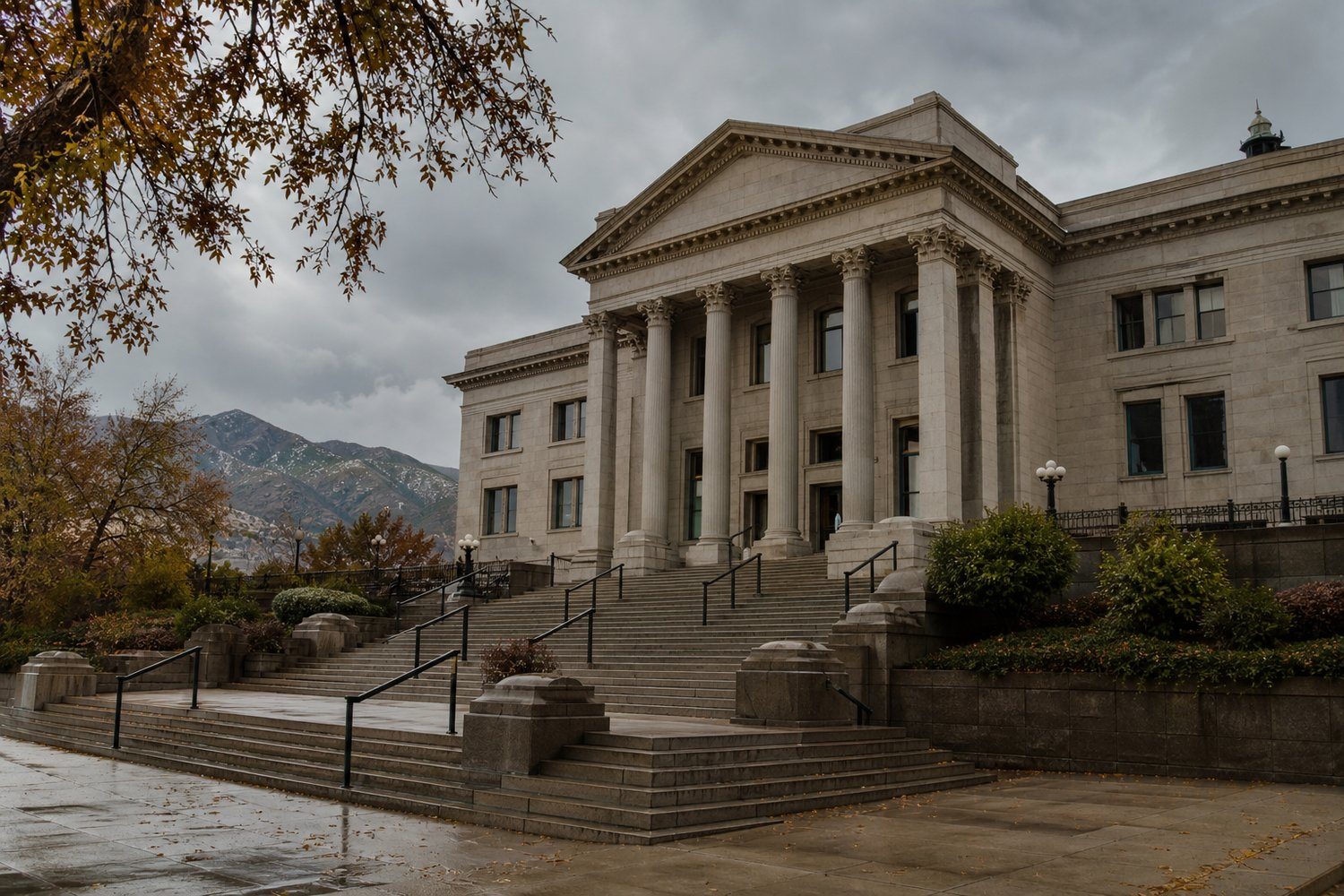
What could Salt Lake City's mixed-use zoning mean for nearby homes?
Salt Lake City has adopted one citywide mixed-use change, a consolidation of as many as 27 commercial, form-based, and mixed-use districts into six mixed-use districts, and it has several site-specific rezoning requests under review in 2026. What a request could mean for nearby homes depends on your parcel's zoning, its future-land-use designation, and what the City Council actually approves. A request is not a rule until an ordinance passes and takes effect.
Key Takeaways
- The adopted Commercial & Mixed-Use Zoning District Consolidation folded as many as 27 districts into six new mixed-use districts. It was adopted July 8, 2025 and took effect October 8, 2025, so it is a code change, not a proposal.
- The 2026 Trolley House request at 705 E. 500 S. seeks a change from MU-5 (55-foot maximum height) to MU-11 (125-foot maximum height) for a 15-story, 166-foot building. Those figures apply to that project, not to every MU-11 site.
- The request at about 1556 S. 500 E. proposes changing R-1-5000 Single-Family Residential to MU-2 Mixed Use 2, plus a General Plan amendment, to restore neighborhood-serving retail.
- The Ballpark rezoning is no longer a proposal. In October 2026 the City Council approved MU-8 and MU-5 zoning for about 15 acres at the former Smith's Ballpark site, after the areas first proposed as MU-11 were lowered to MU-8.
- The proposal that reaches the most homeowners is the city's Expanding Housing Options initiative for single-family and two-family districts. Council public hearings are scheduled for November 10 and November 17, 2026.
- A public-comment notice or planning page confirms a proposal is under review, not that the zoning has changed. Check both your parcel's zoning district and the future-land-use map before you assume anything about the lot next door.
How do I tell an adopted zoning rule from a proposal near my home?
Look at the stage. A request that is under review is a possibility, while an ordinance the Council has adopted and made effective is the rule.
I walk my clients through this before they react to any notice, because the three stages get blurred constantly:
- An applicant's request. Someone asks the city to change the zoning map, the plan, or both.
- A Planning Commission recommendation. The commission reviews the request and weighs in, which still isn't a decision to change the zoning.
- City Council adoption. Only an ordinance that is approved and effective changes what the zoning allows.
The one citywide change in this space is already adopted. The Planning Division's adopted zoning amendments page describes the consolidation as intended to streamline zoning regulations, clarify language, and integrate missing design standards. How that lands on a house nearby still depends on the parcel's district, any overlay or master-plan provisions, the development standards, and the specific use proposed.
Most of the rest of this post covers site-specific requests. Those are not one citywide rezoning, and they are not proof that every Salt Lake Valley municipality is making the same changes.
What could a mixed-use rezoning mean for nearby homes?
It could change the allowed height, the mix of uses, and the number of homes on a nearby parcel, but only the specific ordinance and later site approvals decide which of those happen. A zoning label is a starting point, not a forecast.
Height and density: the Trolley House example. The clearest 2026 illustration is the proposed Trolley House at 705 E. 500 S. According to the city's project page, the applicant is seeking a zoning-map and General Plan amendment to support a 15-story mixed-use building with for-sale condominiums and ground-floor retail. The request is to move from MU-5, with a stated maximum height of 55 feet, to MU-11, with a stated maximum of 125 feet. The proposed building is 166 feet tall, which relies on a three-story height bonus available through the city's Affordable Housing Incentives.
The same project page shows the request also seeks to change the Central Community Plan's future-land-use designation from Medium Density TOD (20 to 50 dwelling units per acre) to High Density TOD (more than 50). That is why I tell people to check both the zoning and the plan. Those numbers belong to that proposal. They do not mean every nearby MU-5 parcel can be built at that height or density. The comment period ran from August 25 through October 9, 2026; the request still goes to the Planning Commission for a recommendation and then to the City Council for a final decision.
Uses and street activity: the 1556 S. 500 E. example. Not every mixed-use request is a tower. The city's case page for about 1556 S. 500 E. describes a request to change R-1-5000 Single-Family Residential to MU-2 Mixed Use 2. The property was a hair salon that was converted to a single-family home in 2018, and the stated purpose is to restore its commercial use for neighborhood-serving retail. Because the request doesn't match the Central Community Plan's future-land-use map, a General Plan amendment is part of it too. The comment period ran from September 14 through October 29, 2026.
Depending on the district and the approved site plan, a mixed-use zone can affect ground-floor retail, office or service uses, multifamily housing, building height, parking demand, loading activity, pedestrian improvements, and traffic patterns. Those are possible effects, not guaranteed ones.
An adopted example: the Ballpark site. The Ballpark rezoning shows how much a request can change before it becomes law. The March 2026 Planning Commission draft minutes discuss rezoning the city-owned stadium land and nearby parcels toward MU-11 and MU-5. By the time the City Council voted in October 2026, the areas first proposed as MU-11 had been moved to MU-8. The Council unanimously approved MU-8 and MU-5 zoning on about 14.8 acres that were mostly zoned public land, with MU-8 allowing heights of up to 95 feet in certain circumstances and at least five acres kept as open space, according to KSL. Anyone who judged the neighborhood's future from the original MU-11 request would have planned around taller buildings than the Council ultimately allowed there.
Where the 2026 Salt Lake City zoning items stand
Here is what each item says about what it could mean for nearby homes, based on the city's own materials and Council action as of early November 2026.
| Item | What was requested or adopted | Status |
|---|---|---|
| District consolidation (citywide) | As many as 27 districts consolidated into six mixed-use districts | Adopted July 8, 2025; effective October 8, 2025 |
| Former Smith's Ballpark site | About 14.8 acres, mostly public land, rezoned to MU-8 and MU-5 (first proposed partly as MU-11) | Approved by the City Council in October 2026 |
| 705 E. 500 S. (Trolley House) | MU-5 (55 ft maximum) to MU-11 (125 ft maximum), plus a plan amendment, for a 166-ft building | Proposal; comment period closed October 9, 2026 |
| About 1556 S. 500 E. | R-1-5000 Single-Family Residential to MU-2 Mixed Use 2, plus a plan amendment | Proposal; comment period closed October 29, 2026 |
| Expanding Housing Options (citywide) | Changes to R-1, R-2, SR-1, and SR-1A district rules | Proposal; Council hearings November 10 and 17, 2026 |
The proposal that reaches the most homeowners
If you own a single-family home in Salt Lake City, the item most likely to change what can be built next door is not a mixed-use rezoning. It is the Planning Division's Expanding Housing Options initiative, which proposes changes to the rules in the R-1, R-2, SR-1, and SR-1A districts to give owners more options for using their property, including smaller backyard dwellings, modestly higher permitted heights, and some reduced setbacks.
It is still a proposal. The Planning Commission voted 5-0 in September 2026 to recommend it, and the City Council has scheduled public hearings for November 10 and November 17, 2026, with a vote possible as soon as December, according to The Salt Lake Tribune. A Council straw poll in October added an owner-occupancy requirement, so the version that comes to a vote may differ from the one the commission endorsed. If you want to weigh in, those hearings are the window. If you are weighing an accessory unit of your own, my post on renting out a basement apartment in Salt Lake City covers what is allowed today.
Does a zoning proposal change my home's value right away?
Not in any way I can put a number on. Buyers and appraisers react to what is approved and what is actually built, and that varies enormously by block. Whether a nearby project helps, hurts, or does little to your home's value depends on your property, the project, and the timing. The way to judge it is a comparison of your home against recent sales nearby, which you can start with a free home evaluation.
What should I check if a proposal is near my property?
Start with the city's Planning Division case page and zoning map, then read the zoning text and plan for your own parcel. Here is the order I use:
- Confirm your parcel's zoning district on the city's current zoning map, then read the zoning text for that district through the Planning Division.
- Check the future-land-use designation in the applicable community plan. A zoning change and a plan amendment can travel together, as they do at both 705 E. 500 S. and 1556 S. 500 E.
- Find the case page and note the stated public-comment deadline, Planning Commission action, City Council hearing, ordinance status, and effective date. The City Attorney's public notices page lists matters headed to Council, such as an October 6, 2026 hearing on rezoning about 140 N. B Street and 272 E. 3rd Avenue from RMF-35 to MU-2. Those notices identify matters for consideration, not adopted zoning, unless an ordinance was later approved and took effect.
- Read what is actually requested. A zoning-only change is different from a zoning and plan amendment.
- Remember what still has to happen. A rezoning does not set a construction timeline. A project may still need land-use approval, site-plan or design review, building permits, and financing, and the materials I've reviewed give no verified completion date for the 2026 proposals above.
Procedure changes are worth watching too. The city published a July 2026 proposal to amend planned-development procedures and community-benefit requirements under Section 21A.55. It is a proposed procedural amendment, so its existence doesn't show that anyone's development rights changed.
How this connects to your sell, keep, or rent decision
If a nearby proposal has you weighing a move, the timing question is bigger than one notice. My post on whether it's a good time to sell in Salt Lake County in 2026 covers the market side, and selling versus renting out your Salt Lake City house covers the alternative.
Conditions also vary sharply inside the city. In the six months through November 2, 2026, Salt Lake City as a whole had about 3.9 months of residential supply, according to our team's Wasatch Front MLS feed. The 84102 ZIP code around the Trolley House site had about 7.5 months, with resale listings sitting at a median of 106 days on market, which is a buyer's market. Nearby 84105 had about 2.3 months, a strong seller's market. If a nearby proposal has you thinking about selling, the market in your own ZIP code will usually matter more to your price and timeline than the notice will.
Your parcel, your block, and your timeline are what matter, and no general article can tell you that. This is exactly the kind of question I work through with clients before they decide to list, hold, or buy near a pending project. My team can pull the case, read the actual request, and tell you plainly what it does and doesn't change.
Frequently Asked Questions
Is Salt Lake City changing the zoning near my house?
Possibly, but it depends on your parcel. The citywide district consolidation is already adopted, and the Ballpark rezoning was approved in October 2026. Other changes are site-specific requests or citywide proposals, such as Expanding Housing Options, that are only proposals until the Council adopts an ordinance. Check your parcel's zoning and any open case on the Planning Division site.
How can I find out whether my property is near a proposed mixed-use project?
Search the Planning Division's open-house and case pages for your street or nearby addresses, and review the city's public notices for matters headed to Council. Then confirm your own zoning on the city's zoning map. If you give me your address, I can pull the cases around it.
What does an MU-2, MU-5, MU-8, or MU-11 designation allow?
The allowed uses and development standards come from the zoning text for each district, so read that text rather than relying on the label. The 2026 Trolley House page states a 55-foot maximum for MU-5 and 125 feet for MU-11, but that describes that proposal. MU-2 was proposed at 1556 S. 500 E. for neighborhood-serving retail, and MU-8 was applied at the Ballpark site.
How do I comment on or object to a zoning-map amendment?
Use the public-comment period stated on the city's case page, then follow the case through Planning Commission action and the City Council hearing. Comment windows close, so check the deadline early. The 1556 S. 500 E. period, for example, ran through October 29, 2026, but the Planning Commission and City Council hearings that follow are still open to public comment.
Does a zoning proposal change my property's value right away?
No verified rule says it does. Value responds to what is approved and built, and that varies by parcel and project. A comparison of your home against recent local sales is the right way to judge it.
The bottom line
A notice tells you something is being reviewed, and an effective ordinance tells you what changed. The Ballpark site shows how far a request can move before it becomes law, so knowing what a rezoning could mean for nearby homes starts with your own parcel's zoning and plan designation, and with where each case actually stands.
If you're buying or selling in Salt Lake City or anywhere across the Wasatch Front, we're happy to consult on the market and help you assess your options. Reach out to schedule a private consultation with our team, and we'll pull the cases near your address and tell you plainly what they do and don't change for your home.
About David Lawson
David Lawson is the founder of the Lawson Real Estate Team, a real estate group serving Salt Lake City and the greater Wasatch Front, including Sugar House, Holladay, Cottonwood Heights, Draper, and the fast-growing southwest valley and northern Utah County. He leads a team that has closed more than 3,920 transactions and earned recognition as the #1 eXp Realty team in Utah (2022–2025) and previously the #1 Engel & Völkers team worldwide (2019, 2021). David and his team work with buyers and sellers across the full market—from first-time buyers and condos to move-up family homes, multifamily investments, and luxury properties—guiding clients through one of the fastest-growing housing markets in the country.
Equal Housing Opportunity. This article is general information, not legal, tax, or financial advice. Zoning status changes; confirm the current status of any case with the Salt Lake City Planning Division, and confirm your own situation with your closing agent, tax advisor, or lender.
David Lawson
Team Leader | Lawson Real Estate Team
or another way