

Categories
Buying, Park CityPublished October 26, 2026
Park City-Area Housing Demand After Junction Commons

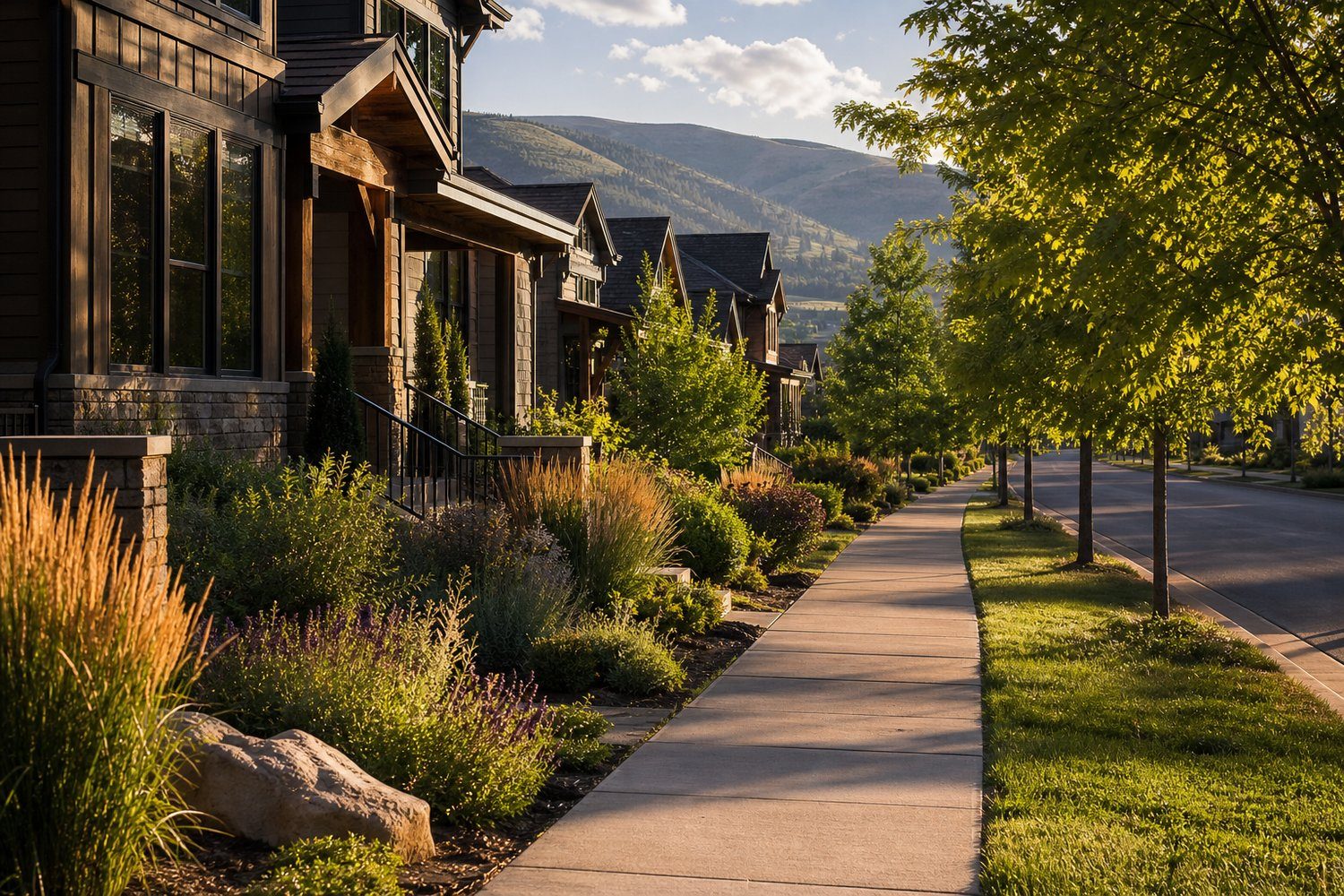
Junction Commons will add homes at the Kimball Junction end of the Snyderville Basin, but it will change Park City-area housing demand gradually, not overnight. The Summit County Council approved 370 residential units on September 8, 2026, and nothing has been built yet. The effect will arrive phase by phase over most of a decade, and it lands on the apartment, condo and townhome end of the market, not on Deer Valley or Old Town luxury inventory. Meanwhile, the Kimball Junction market that buyers and sellers face today is already a buyers' market: 40 active residential listings against about four sales a month, or 9.6 months of supply, in our Park City MLS data.
Key Takeaways
- The Summit County Council unanimously approved Junction Commons on September 8, 2026: 370 residential units (300 multifamily and 70 townhomes) plus about 55,000 square feet of commercial space across 19 buildings on the former Outlets Park City site at 6699 N. Landmark Drive.
- 220 of the 370 units, about 59%, are designated affordable: 188 at roughly 80% of area median income and 32 at roughly 60%, according to The Park Record.
- The approved plan is smaller than the 433-home version the planning commission recommended in February 2026, so any analysis built on the earlier number overstates the supply.
- KPCW reports a build-out of six phases over eight to ten years. Nothing is available to rent or buy today.
- The attached-home market around Kimball Junction already has plenty of choice: 40 active listings, 9.6 months of supply, and 2026 condo and townhome sales closing at a median 94.9% of original list price (Park City MLS, October 26, 2026).
What did Summit County actually approve at Junction Commons?
The council approved a rezone from Town Center to Neighborhood Mixed-Use 1 and a master-planned development for 370 residential units, made up of 300 multifamily units and 70 townhomes, plus roughly 55,000 square feet of commercial space and about 8,000 square feet of amenity and clubhouse space. TownLift describes a 19-building mixed-use redevelopment, and The Park Record reports it is the first use of the Snyderville Basin's neighborhood mixed-use zone, which the county created more than five years ago.
The site is the former Outlets Park City property in Kimball Junction, in Summit County's Snyderville Basin. It is not in Salt Lake County, so I'm keeping this analysis to the Park City and Snyderville Basin market.
Why does the approved number differ from earlier coverage?
The developer cut density during the review. KPCW’s February 2026 coverage described the version the planning commission forwarded: 433 homes on the upper loop, plus 77 apartments above new commercial space on the lower loop. TownLift’s June 2026 reporting covered the revision that dropped a 110-unit market-rate apartment building and raised the affordable count.
| Item | February 2026 proposal | Approved September 8, 2026 |
|---|---|---|
| Residential units | 433 | 370 |
| Affordable units | 205 | 220 |
| Affordable share (rounded) | About 47% | About 59% |
The February figures are as reported by The Park Record and TownLift; KPCW's February story also counted the 77 lower-loop apartments. The county's own documents control the final details, and a binding development agreement still has to be drafted before construction begins. That agreement sets the affordability levels, eligibility rules, deed restrictions and delivery order, so confirm them there before you rely on the 220 figure for any specific unit.
What will it do to rentals and attainable housing?
Most of the project is multifamily, and 220 of the 370 units are designated affordable. If they are delivered as approved, they target a part of the market that has been short on inventory. I won't promise you a rent drop. Restricted units serve eligible households, not everyone, and roughly 150 market-rate units spread over several phases is a different thing from a flood of supply. TownLift's June reporting also described 28 of the townhomes as for-sale homes intended to be attainable for households at 100% to 120% of area median income, so not every townhome will be an open-market unit.
What does it mean for condo and townhome buyers today?
The townhomes will eventually add a new product near the Kimball Junction retail core, but the comparison set they join is already deep. As of October 26, 2026, the Park City MLS shows 40 active residential listings in the Kimball area, 35 of them condos and townhomes at a median list price of $595,000, and only one listing under contract. Fifteen of those 35 have already cut their price.
Through October 26, 31 Kimball-area condos and townhomes closed in 2026 at a median $660,000, compared with 34 at a median $697,500 over the same stretch of 2025, and they sold for a median 94.9% of their original list price. At about four sales a month, that is 9.6 months of supply. For a buyer this year, that matters more than any approval: you are negotiating in a buyers' market now, and Junction Commons' first homes are years away.
Junction Commons is also one piece of a larger pipeline. TownLift counts roughly 1,400 homes planned or allowed across Junction Commons, Altus (the former Dakota Pacific project, up to 885 homes) and Utah Olympic Park workforce housing, so I treat this project as one factor in pricing, not a market-wide reset. I'd also keep it separate from resort-driven demand. Larger forces, like the ones I cover in my posts on the Deer Valley East Village expansion and the 2034 Winter Olympics, work on the luxury and second-home end of the market in a different way.
When will any of it be available?
Approval is not construction. KPCW reports six phases over eight to ten years, with the upper-loop redevelopment alone expected to take two to four years. Treat that as a reported schedule, not a guaranteed completion date. The September approval does not mean any building has permits or that any unit is leasing or for sale today. For the deed-restriction and phasing details an investor needs, see my earlier breakdown of what Junction Commons means for Park City buyers and investors.
What can't the numbers tell you yet?
I won't hand you a price forecast built on one approval. The county documents don't establish an effect on home prices, and the approval says nothing about Salt Lake Valley pricing. How this plays out for you depends on your price range, your timeline, and whether you're buying to live in the home, to rent it, or to hold it. That's the conversation I have with clients when we compare Basin options side by side.
What will Junction Commons do to traffic around Kimball Junction?
Traffic was the central concern throughout the review. When the Snyderville Basin Planning Commission forwarded the project on a 6-1 vote in February 2026, it added a condition calling for a traffic mitigation plan for each phase and for overall build-out, with Utah Olympic Park and Dakota Pacific considerations included where allowable, according to the meeting minutes. The Park Record reports that council members again raised density and cumulative traffic alongside other Basin projects before approving it in September.
A June 24, 2026 county memo, reported by TownLift, estimated cumulative traffic from several Kimball Junction projects, including Junction Commons and the Utah Olympic Park housing, at about 13,621 daily trips, with 1,211 morning and 1,169 afternoon peak-hour trips, and said that stays below the growth already assumed in the county's 2050 travel-demand model. That figure covers several projects together, not Junction Commons alone. The same memo found that Landmark Drive at the Whole Foods and Marriott access and at Landmark Loop fall below county standards under 2050 conditions, a deficiency already in the long-range forecasts with or without these projects.
Possible fixes in that reporting include three-quarter access at Landmark Drive and Landmark Loop, a study of the Whole Foods and Marriott intersection, and a northbound through lane at Landmark Drive and Ute Boulevard. Those are potential measures, not completed improvements.
If you're buying or investing near Landmark Drive, Ute Boulevard or the Kimball Junction retail core, factor in years of construction and changing traffic patterns. If you own nearby, expect both disruption and new amenities. If you're weighing new product elsewhere in the Basin, read my post on what Snyderville Basin buyers should know about new construction before you commit.
How should you plan around the approval?
Treat Junction Commons as a long-horizon supply signal, not a reason to rush or to wait. Here's how I frame it with clients:
- Buyers: negotiate on today's inventory, which is ample, and don't assume future supply makes current pricing a bargain or a mistake.
- Sellers: if your property sits close to Kimball Junction, price against the 40 homes buyers can tour today, in a market running about 9.6 months of supply, not against a project that hasn't been built.
- Investors: underwrite rents on current comparable units, confirm whether any unit you're evaluating is restricted or market-rate, and treat new multifamily supply as a variable to monitor by phase.
Your specific number depends on your property, your location and your timeline, and a local market analysis is how we find it. My team works the Park City, Deer Valley and Snyderville Basin markets every week, and we can show you how nearby comparable properties are actually trading.
If you want to see what past clients say about working with us, you can read our reviews on Google, Zillow and Realtor.com.
Frequently Asked Questions
How many homes will Junction Commons add to the Kimball Junction housing market?
The approved plan includes 370 residential units: 300 multifamily units and 70 townhomes. It sits on the former Outlets Park City site at 6699 N. Landmark Drive and will be built in phases. The version the planning commission recommended in February 2026 had 433 homes, and the count was reduced before the council approved it.
How many Junction Commons units will be affordable or deed-restricted?
220 of the 370 units, about 59%, are designated affordable: 188 at roughly 80% of area median income and 32 at roughly 60%, according to The Park Record. A binding development agreement still has to be drafted before construction, and it will set the final eligibility rules and deed-restriction terms, so confirm against it before you rely on any one unit.
Could Junction Commons lower rents or home prices in the Park City area?
It could add competition at the rental and townhome level over time, but the approval alone can't show a price effect. The units arrive in phases over years, and the restricted ones serve eligible households. In the meantime, the Kimball Junction condo and townhome market is already a buyers' market, with about 9.6 months of supply in Park City MLS data as of October 26, 2026.
When will the Junction Commons homes be built and available?
No units are available yet. KPCW reports a build-out of six phases over eight to ten years, with the upper-loop redevelopment alone expected to take two to four years. Treat that as a reported schedule, not a guaranteed completion date.
How will Junction Commons affect traffic on Landmark Drive and Ute Boulevard?
The planning commission's recommendation called for a traffic mitigation plan for each phase and at full build-out. Options reported by TownLift include three-quarter access at Landmark Drive and Landmark Loop, a study of the Whole Foods and Marriott intersection, and a northbound through lane at Landmark Drive and Ute Boulevard. Those are potential measures, not finished improvements.
The bottom line
Junction Commons is a meaningful addition to the Kimball Junction pipeline, but it shapes Park City-area housing demand slowly, mostly at the rental and townhome end, and its first homes are years out. The market that decides your price this year is the one already listed, and right now it favors buyers. If you own near Kimball Junction and want to see where your property stands, request a free home evaluation.
If you're buying or selling in Park City or anywhere across the Wasatch Back, we're happy to consult on the market and help you assess your options. Reach out to schedule a private consultation with our team, and we'll show you how today's Kimball Junction sales and the Junction Commons timeline fit your plans.
About David Lawson
David Lawson is the founder of the Lawson Real Estate Team, a luxury real estate group serving Park City and the greater Wasatch Back, including Hideout, Midway, Heber, and Kamas. He leads a team that has closed more than 3,920 transactions and earned recognition as the #1 eXp Realty team in Utah (2022–2025) and previously the #1 Engel & Völkers team worldwide (2019, 2021). David and his team specialize in high-end mountain properties, from single family homes and new construction to ski-in/ski-out vacation properties and short-term rental investments, guiding buyers and sellers through one of the most segmented luxury markets in the country.
Equal Housing Opportunity. Each office is independently owned and operated. Real estate licensees in Utah are regulated by the Utah Division of Real Estate. This article is general information, not legal, tax, or financial advice; confirm your own numbers with your closing agent, tax advisor, or lender.

David Lawson
Team Leader | Lawson Real Estate Team
or another way